Used Ford Engine for Sale (USA) — The Complete Buyer’s Guide (Young Mechanic)
Table of Contents
Toggle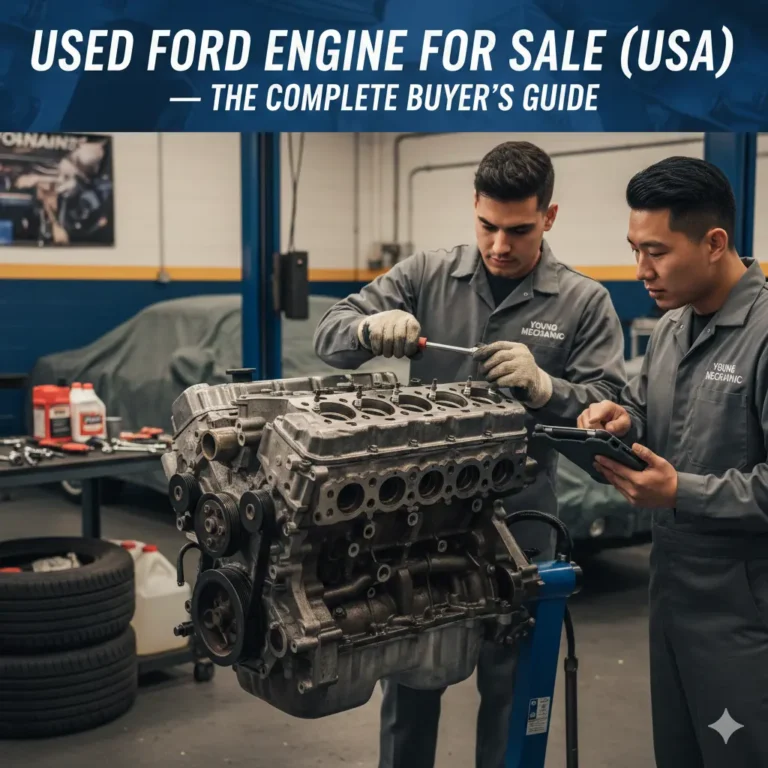
Looking for a used Ford engine for sale in the USA but don’t want to overpay or end up with the wrong fitment? You’re not alone. Ford engines like the EcoBoost 2.0L, 3.5L Twin Turbo, Duratec 2.5L, Coyote 5.0L, and Triton V8 series remain some of the most in-demand replacement engines in the American market—mainly because newer OEM replacements can cost 2–4x more than a quality used or remanufactured unit.
However, the real challenge is identifying reliable U.S. sellers, checking accurate mileage and compression reports, understanding market-standard pricing, and verifying VIN compatibility before you spend a single dollar. A wrong engine code, hidden internal damage, or missing accessories can easily turn your repair into a $3,000–$7,000 mistake.
That’s exactly why this guide exists.
In this complete U.S.-focused buyer’s guide, YoungMechanic breaks down:
- Realistic price ranges in USD for Ford engines from junkyard grade to premium reman units
- What warranties reputable American suppliers actually provide (30–90 days used, 6–36 months reman)
- A step-by-step engine verification checklist used by professional mechanics
- How to compare mileage, engine codes, and compatibility to avoid fraud
- What to ask your supplier before buying — especially for F-150, Mustang, Explorer, and Fusion engines
By the end, you’ll know exactly how to choose the right used Ford engine with confidence, save money, and avoid every common buyer scam in the U.S. engine market.
Why Buy Used or Reman Ford Engines in the U.S. Market?
Purchasing a used or remanufactured Ford engine in the USA is one of the smartest ways to keep repair costs under control—especially as OEM crate engines continue to rise in price. In many cases, a new Ford engine can cost anywhere from $6,000 to $14,000+, making alternatives like used and reman units far more attractive for everyday drivers, fleet owners, and repair shops.
Used Engines (Budget-Friendly, Faster Availability)
A used Ford engine pulled from a donor vehicle offers the lowest upfront cost—often 40–70% cheaper than buying new. Salvage yards, insurance auctions, and certified dismantlers in the U.S. list thousands of low-mileage engines from accident-damaged vehicles that still have excellent internal health. These engines typically:
- Come with 30–90-day warranties (depending on the seller)
- Include original factory parts, sensors, and accessories
- Are quickly available and shipped nationwide
The tradeoff: mileage and internal wear vary, and buyers must perform proper VIN and engine-code matching to avoid compatibility issues.
Remanufactured Engines (OEM-Level Reliability)
Reman Ford engines go through a complete teardown, machining, and rebuilding process where worn parts are replaced with new components that meet or exceed OEM specifications. Major U.S. remanufacturers use updated engineering fixes for common Ford issues—such as Triton V8 cam phaser problems or EcoBoost carbon buildup—resulting in longer life and higher reliability.
Benefits of reman engines include:
- 12–36-month nationwide warranties
- Lab-tested compression and oil pressure results
- Zero-mile condition after rebuild
- Compatibility with Ford’s own service guidelines
Ford Motor Company itself sells reman engines through its dealer parts network, proving how widely trusted remanufacturing is in the U.S. replacement market.
Why Most U.S. Buyers Choose These Options
Whether you need a Coyote 5.0L for an F-150, a 3.5L EcoBoost for an Explorer, or a 2.5L Duratec for a Fusion, buying used or reman helps you:
- Cut total repair cost by thousands of dollars
- Avoid long wait times for new OEM shipments
- Get an engine that’s already proven on the road or rebuilt to factory standards
- Improve resale value compared to installing a higher-mileage or unknown-condition unit
In short, the U.S. market makes used and reman Ford engines both accessible and cost-effective, offering a perfect balance between affordability, reliability, and nationwide support.
U.S. Ford Engines You’ll Commonly Find (and Who Typically Buys Them)
The U.S. used-engine market consistently lists thousands of Ford engines across sedans, trucks, SUVs, and performance builds. Because Ford is one of America’s largest vehicle manufacturers, these engines appear frequently on salvage marketplaces, dismantler inventories, dealer networks, and remanufacturing catalogs.
Below are the most common Ford engines you’ll find for sale in the U.S.—along with the buyers who typically search for them:
2.3L EcoBoost (Mustang, Ranger, Explorer, Focus RS)
One of Ford’s most successful turbocharged engines, the 2.3L EcoBoost is widely available thanks to its use in multiple high-volume U.S. models.
Who buys it:
- Mustang owners seeking a budget-friendly replacement
- Off-road enthusiasts upgrading Ranger builds
- Performance tuners doing lightweight engine swaps
- Focus RS owners looking for low-mile replacements (a high-demand niche)
It’s especially popular because it delivers strong power with excellent fuel efficiency.
3.5L & 3.7L V6 (F-150, Edge, Explorer, Taurus, Transit)
These naturally aspirated and EcoBoost V6 options are extremely common in salvage yards due to their mass production across Ford sedans and SUVs.
Who buys it:
- Everyday drivers wanting a mid-budget replacement
- Fleet owners (Transit vans, police Interceptors)
- Mechanics who need reliable plug-and-play units for quick installs
The 3.5L V6 EcoBoost is one of the highest-selling truck engines in America, making it easy to find with various mileage ranges
5.0L “Coyote” V8 (Mustang GT, F-150)
Arguably Ford’s most iconic modern V8, the Coyote 5.0L is in high demand across performance and truck markets.
Who buys it:
- Mustang GT owners needing low-mile replacements
- F-150 owners replacing high-mile truck engines
- Engine swap builders (classic Mustangs, Broncos, street rods)
These engines command premium prices but offer excellent durability, especially Gen 2 & Gen 3 variants.
5.4L / 6.8L Triton V8 & PowerStroke Diesels (6.0L, 6.4L, 6.7L)
Truck and commercial vehicle buyers form the largest market for Ford’s heavy-duty engines. The Triton V8 gasoline lineup and PowerStroke diesel series appear frequently in U.S. used-engine inventories.
Who buys it:
- F-Series pickup owners (F-250 to F-550)
- RV and bus owners using 6.8L Triton V10
- Construction and commercial fleet operators
- Diesel mechanics & shop owners looking for reman options
Buyers should be aware of engine-specific issues (e.g., Triton 5.4L cam phasers, 6.0L EGR/cooling failures) and verify that reman units include upgraded components.
Overall U.S. Market Availability
Online marketplaces like auto recyclers, auction networks, and dismantlers consistently show broad supply across these Ford engines, thanks to high production numbers and widespread vehicle usage across the country. This makes the U.S. one of the easiest markets to source compatible Ford engines—whether you need a budget-friendly used unit or a professionally remanufactured one.
Best Places in the USA to Search for Quality Used or Reman Ford Engines
Finding a reliable used or remanufactured Ford engine in the U.S. depends heavily on choosing the right marketplace. The platforms below are the most trusted sources for American buyers, repair shops, and fleet mechanics, offering nationwide listings, VIN-matching tools, and warranty-backed options.
Ford Reman / Ford Genuine Parts
Ford’s official parts network remains the top choice for buyers who need engines that meet strict OEM specifications.
Why people choose it:
- Factory remanufactured engines using updated Ford engineering fixes
- Direct dealer support across the USA
- Engines tested to OEM compression, oil pressure, and material standards
- Ideal for Mustang, F-150, Super Duty, and EcoBoost reliability-focused buyers
These units cost more, but provide the closest experience to a brand-new engine.
Car-Part.com (The USA’s Largest Recycled Parts Marketplace)
Car-Part.com connects buyers to thousands of U.S. salvage yards and dismantlers in real time, making it the most powerful tool for finding used Ford engines with verified compatibility.
Why it’s popular:
- SmartVin and intelligent fitment tools reduce wrong-engine purchases
- Ability to filter by mileage, price, yard rating, and distance
- Great for local pickup, fast delivery, or comparing dozens of seller quotes
- Perfect for buyers looking for budget-friendly donor engines with photos and condition notes
This is one of the best places to find clean, low-mile engines pulled from accident-damaged vehicles.
YoungMechanic (Curated, Verified U.S. Engine Listings – Used + Reman)
YoungMechanic bridges the gap between OEM remanufacturers, salvage networks, and independent sellers by curating verified Ford engine listings from across the USA. Each engine is checked for VIN compatibility, condition accuracy, and seller reliability. Buyers also get ZIP-based freight quotes, photos, and reman vs. used recommendations—saving hours of research and reducing the risk of receiving the wrong engine.
Why U.S. buyers trust YoungMechanic:
- Free VIN compatibility checks for any Ford model
- Curated listings with condition notes and actual photos
- Shipping & freight estimates for any U.S. ZIP code
- Trusted comparison of used vs. reman options (including Jasper & Ford Reman)
- Direct guidance for finding local shops or installers
Young Mechanic is ideal for buyers who want expert-backed selection without navigating dozens of marketplaces.
Jasper Engines & Transmissions (Top U.S. Remanufacturer)
Jasper is one of America’s most reputable nationwide remanufacturers. Their engines are fully rebuilt and machine-tested.
What makes Jasper stand out:
- Industry-standard 3-year / 100,000-mile nationwide warranties on many gasoline engines
- Dyno-tested, upgraded, and engineered to fix common Ford issues (like Triton cam phasers)
- Huge network of installers and distributors across the U.S.
- A preferred option for shop owners, fleets, and long-term reliability seekers
If you want the “install it and forget it” level of confidence, Jasper is a top choice.
U.S. Aftermarket Sellers, Salvage Networks & Online Marketplaces
The American used-parts market is massive, and many trustworthy sellers list Ford engines with detailed photos and shipping options.
Common platforms include:
- eBay Motors (seller ratings + return policies make comparison easier)
- LKQ / Keystone Automotive (one of the largest U.S. salvage networks)
- Pull-A-Part & Pick-n-Pull yards (affordable, DIY-friendly engines)
- Specialty engine resellers with certified used or tested take-out engines
Buyer tip:
Always verify:
- Seller feedback score
- Return/refund policy
- Warranty period
- Engine code, VIN match, and mileage documentation
These platforms offer the widest variety—from clean, low-mile engines to complete long-block assemblies.
U.S. Price Expectations for Used, Rebuilt & Reman Ford Engines (Ballpark USD Ranges)
Engine prices in the United States can vary widely based on engine size, production year, mileage, demand, and whether the unit is used, rebuilt, or fully remanufactured. These updated ballpark ranges reflect real U.S. marketplace averages, including salvage-yard listings, national resellers, and well-known remanufacturers.
4-Cylinder Ford Engines (EcoBoost & Duratec Series)
Typical U.S. pricing for common 4-cylinder engines such as the 2.0L / 2.3L EcoBoost or 2.5L Duratec:
- Used: $600 – $2,000
- Usually pulled from accident vehicles with 40k–90k miles
- Excellent option for Fusion, Escape, Focus, Mustang EcoBoost buyers
Why the price varies: mileage, turbo condition, and model year
V6 Ford Engines (Including 3.5L & 3.7L)
V6 engines remain among the most frequently bought in the U.S. due to high production numbers in SUVs, sedans, and trucks.
- Used/Rebuilt: $900 – $2,500
- Includes both naturally aspirated and EcoBoost versions
- Popular for F-150, Explorer, Edge, Taurus, and Transit vans
Rebuilt units typically sit at the higher end of this range.
V8 Ford Engines (Coyote, Triton & Modular Series)
The V8 market has the widest price spread because performance engines and truck engines carry premium demand.
- Used Small V8: $1,200 – $3,500
- Fully Remanufactured V8: $3,000 – $7,000+
- Coyote 5.0L and certain Triton V8s often cross the $6k+ range
- Premium performance engines (Mustang GT) cost more
Factors impacting price: generation (Gen 1/2/3 Coyote), documented mileage, testing reports, and supply
PowerStroke Diesel Engines (F-Series Trucks)
Diesel engines have the biggest pricing swings because of demand from commercial fleets and the cost of remanufacturing.
- Used/Take-Out: $2,000 – $5,000
- Low-Mile or Reman Diesel: $4,000 – $8,000+
- 6.0L, 6.4L, and 6.7L PowerStroke engines vary significantly
- Heavy-duty diesel rebuilds are expensive due to machining and upgraded components
These engines often come with extended warranties, making them more expensive than gas counterparts.
Important Note on Pricing
U.S. engine prices change quickly due to:
- Auction supply fluctuations
- Seasonal demand (tax season spikes, winter dips)
- Nationwide shipping costs
- Availability of low-mile donor vehicles
Always confirm current listings before buying—these ranges are reliable U.S. market examples but not fixed values.
How to Verify a U.S. Engine Listing — The Complete Step-by-Step Checklist
Buying a used or reman Ford engine in the U.S. requires careful verification. Since prices, mileage claims, and engine conditions vary widely between sellers, this checklist helps ensure you only purchase a correctly fitting, tested, and safely shipped engine — the same process used by professional mechanics and U.S. salvage networks.
1. VIN Fitment & Compatibility Matching
Fitment mistakes are the #1 reason engines get returned in the U.S.
Before buying:
- Ask the seller to cross-check your VIN using their parts database.
- Request a match of engine code, tag number, and serial number to your exact trim.
- Use tools like Car-Part.com SmartVin, which automatically filters compatible engines across U.S. yards.
- Confirm year-to-year differences (e.g., harness changes, intake designs, sensor types).
Never buy an engine based only on “should fit” or “same year.”
2. Ask for Compression Tests or Run/Test Reports
Serious U.S. sellers and remanufacturers provide documentation.
Request:
- Compression numbers for each cylinder
- Oil pressure readings if available
- Run test or cold-start video (common for dismantlers)
- Dyno or quality-control logs for remanufactured engines
If a seller refuses basic test data, that’s a red flag.
3. Verify with Actual Photos & Videos
Real condition photos are crucial for avoiding hidden issues.
Ask for:
- Clear photos of the engine tag/ID plate
- Serial number close-ups
- Oil cap removed (check for sludge or metal flakes)
- Oil pan and block surface photos
- A short video showing:
- Crank rotation by hand
- Engine mounted on test stand (if possible)
These visual proofs help confirm authenticity and condition.
4. Confirm Warranty Terms Clearly (In Writing)
Warranties in the U.S. vary greatly:
- Young Mechanic and major reman brands: 2–3 year nationwide transferable warranties
- Rebuilt shops: 6–12 month warranties depending on parts used
- Private sellers/salvage yards: 30–90 days, sometimes parts-only
Get the warranty in writing, including:
- Duration
- What failures are covered
- Labor reimbursement (if any)
- Requirements for installation or maintenance records
Never rely on verbal promises.
5. Ask About Core Charge & Return Policies
Many U.S. reman sellers add a core charge to ensure you return your old engine.
Ask about:
- Core deposit amount (can range from $300–$1,000 depending on engine)
- Acceptable core condition (cracked blocks may reduce refunds)
- Return window (often 14–45 days)
- Who pays return freight (usually the buyer)
This prevents unexpected costs after delivery.
6. Shipping, Freight & Pickup Options
Engines are heavy and require proper crating in the U.S.
Before buying, confirm:
- Freight carrier used (FedEx Freight, R+L, Old Dominion, etc.)
- Whether shipping includes a liftgate for residential delivery
- Crating/packaging quality to avoid damage
- Exact shipping quote (diesels cost more to freight due to weight)
- Local pickup availability — cheaper but time-consuming
Always check for shipping insurance on high-value engines.
7. Check Seller Reputation & Credibility
Trustworthy sellers leave a trail of good feedback.
- eBay Motors: Check seller rating, years active, and return policies
- Car-Part.com: Look for yards with strong phone support and verified inventory
- Remanufacturers: Confirm they are part of a certified dealer or installer network
- Google reviews: Many large U.S. dismantlers are reviewed by auto shops and fleets
Avoid listings with poor communication, unclear photos, or abnormal pricing.
Shipping and Installation in the U.S. (What Buyers Should Expect)
Shipping and installing a used or reman Ford engine in the USA involves several logistics steps that many first-time buyers overlook. Understanding freight, core returns, and installation standards helps ensure a smooth, stress-free process from purchase to final startup.
Freight Shipping: Palletized, Crated & Scheduled Delivery
Most engines in the U.S. ship via palletized freight, not regular parcel services.
Before buying, confirm:
- A full freight quote upfront (engine + crating + delivery)
- Whether the seller includes liftgate service for residential delivery
- Packaging quality — reman sellers usually ship in reinforced crates, while salvage yards use pallets with straps
- Transit times (typically 3–7 business days across the U.S.)
Many reputable U.S. sellers provide detailed freight estimates during checkout or via email so you know the total cost before committing.
Core Returns: Standard Policy for Reman and Some Rebuilt Engines
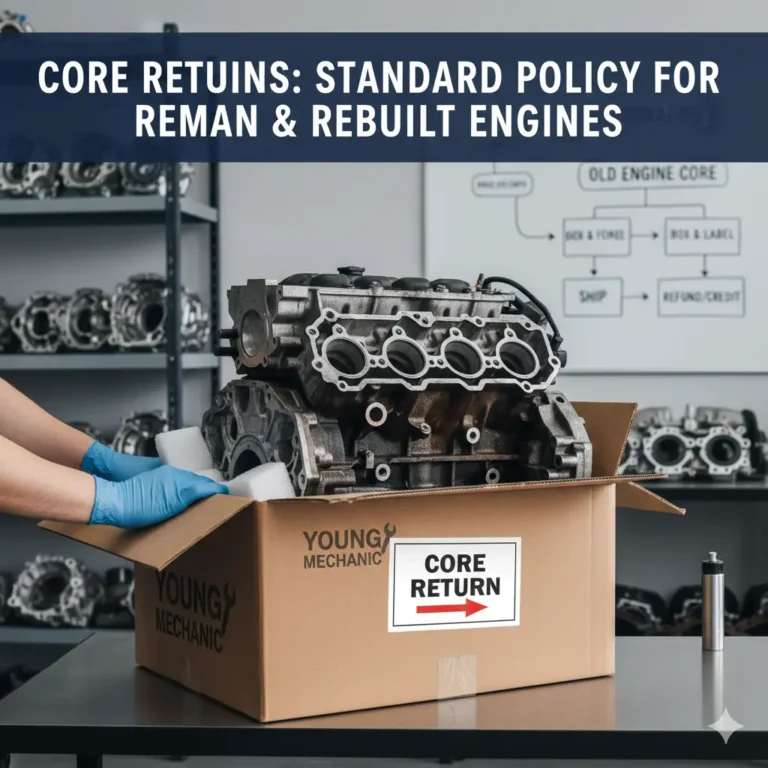
Most U.S. resellers, especially remanufacturers, charge a refundable core deposit. This ensures buyers return their old engine for recycling or rebuilding.
Key things to verify:
- Core charge amount (commonly $300–$1,000 depending on engine type)
- What condition your core must be in (cracked blocks may lower refund value)
- Return deadlines — often 14–45 days after delivery
- Who pays freight for core return (usually the buyer)
- Required paperwork to match your core to the original purchase
Reading the core policy in advance prevents surprises and protects your refund.
Installation: Use Certified, Experienced U.S. Shops

Engine installs require experience—especially with modern EcoBoost, Coyote, Triton, and PowerStroke engines.
In the U.S., the safest choice is to use a:
- Certified repair shop
- ASE-certified mechanic
- Installer recommended by your engine supplier
Why this matters:
- Warranty claims often require professional installation receipts
- Shops familiar with Ford models understand common issues: fuel trims, PCM relearn, timing calibrations, etc.
- Young Mechanic, Ford Reman, and most nationwide remanufacturers offer approved installer networks, which guarantees proper setup and protects your warranty.
Ask your seller for recommended shops—they often have nationwide partners or preferred installers in your ZIP code.
Major Red Flags in U.S. Engine Listings (Walk Away If You See These)
Not all used-engine listings in the USA are trustworthy. Some sellers cut corners, hide defects, or list engines that won’t fit your vehicle. These warning signs indicate you should avoid the listing completely.
Stock Photos Only — No Real Engine Photos
If a U.S. seller shows only catalog or stock images instead of actual photos of the engine:
- The engine may not exist
- The seller may be hiding damage
- Mileage or condition claims may be false
Legitimate U.S. dismantlers always provide actual photos of the engine tag, block condition, oil pan, and accessories.
No VIN Fitment Support or Refusal to Share Engine Tag/Serial
Any reliable U.S. seller should easily provide:
- Engine tag ID
- Serial number
- VIN match confirmation
If they refuse or delay, they may be:
- Hiding compatibility issues
- Selling a different engine than advertised
- Unwilling to verify fitment (major red flag)
In the U.S., VIN fitment matching is the industry standard.
“No Returns” + No Testing Documents or Condition Reports
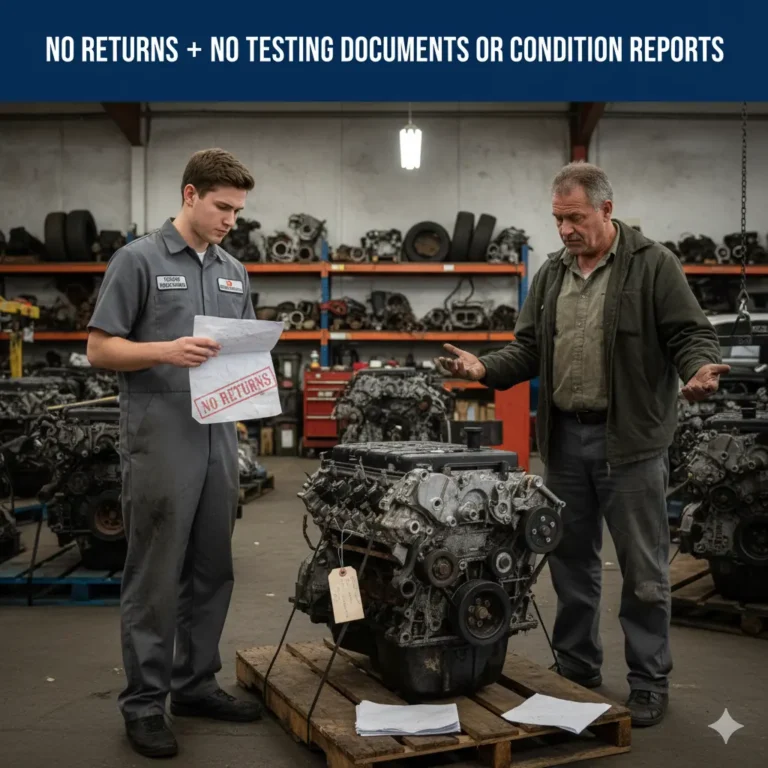
Be cautious of listings with:
- No compression test
- No run test
- No inspection notes
- No return policy
This usually indicates the engine may have unknown internal damage or the seller doesn’t want accountability.
Most reputable U.S. salvage yards offer at least 30–90 days return or replacement.
Price Is Far Below U.S. Market Value
A deal that is too cheap compared to other U.S. listings is almost always a warning sign. It may indicate:
- Missing sensors, turbos, or wiring harness
- Cracked block or blown head gasket
- Extremely high mileage
- Salvage title parts with hidden issues
- Incorrect engine variant or model year
If a Ford engine is priced 40–50% lower than typical listings, walk away unless you verify every detail.
Why Choose a Remanufactured Engine in the USA?
Remanufactured engines in the U.S. — including brands like Ford Reman, Jasper, and other top American remanufacturers — are rebuilt to original OEM standards using upgraded parts and precision machining. Most are run-tested, pressure-tested, and inspected before shipping, giving you performance close to a new engine without the high price tag.
One of the biggest advantages is warranty coverage. Many U.S. remanufacturers offer nationwide warranties, giving buyers long-term protection and peace of mind. For example, Jasper’s nationwide warranty shows the level of reliability and support customers can expect with a quality remanufactured engine.
If you’re looking for long-term dependability, reduced risk, and OEM-level performance, a remanufactured engine is often the safest investment.
How YoungMechanic Helps U.S. Buyers

At YoungMechanic, we make it easier for U.S. customers to choose the right engine by curating the best listings, verifying VIN fitment, and adding clear condition notes. We also highlight remanufactured vs. used engine options, helping you compare pricing, reliability, and long-term risk before you buy.
If you’re located in the U.S., we can assist you with:
- Free VIN compatibility check to confirm the engine fits your vehicle.
- Remanufactured engine recommendations with warranty details and nearby installer suggestions.
- Shipping and freight estimates based on your ZIP code.
Ready to explore your options? Visit our U.S. Ford Engine Inventory on Young Mechanic or contact us for a free VIN check and a reman vs. used comparison.
U.S. FAQ — Quick Answers
Q: Is a remanufactured engine worth the extra cost in the U.S.?
A: In most cases, yes. Remanufactured engines are rebuilt to OEM standards, run-tested, and often include nationwide warranty coverage. Brands like Jasper and Ford Reman set the benchmark in the U.S. market. At YoungMechanic, we help you compare used vs. reman options so you can choose the safest long-term investment.
Q: Can I ship an engine across state lines?
A: Absolutely. Most reputable U.S. suppliers offer nationwide freight shipping. Always verify crating quality, freight insurance, and pickup/delivery windows. If you buy through YoungMechanic, we’ll provide ZIP-code-specific freight estimates and ensure your shipment meets safe-handling standards.
Q: How much should I budget for installation?
A: Installation costs differ by shop, region, and the complexity of your Ford engine. Expect anywhere from a few hundred dollars to over a thousand USD. Factors include labor rates, the need for new gaskets, and whether accessories or wiring harnesses must be replaced. YoungMechanic can also connect you with trusted U.S. installers for a smooth, professional installation.